
Goldsboro Previous Residents by Era
A backward address trail begins with a modern parcel identity, then changes sources as the years move earlier. Wayne Tax and the Register of Deeds provide the current parcel and recorded-transfer layer. Directories and telephone books add dated name-and-address snapshots. Census pages describe households only after their federal release date. A permit, obituary, or map can explain a structure or family transition, but none should replace the legal description in the deed chain.
| Source | Years | Where Held | What It Shows |
|---|---|---|---|
| Wayne ROD records | Office says 1913 forward; most real estate online from 1971; certified real-estate range 1969-1994 | Wayne ROD portal and counter; older books or Archives check | Recorded instruments, legal descriptions, plats, and liens |
| Goldsboro directories | DigitalNC editions from 1911-12 through 1962; uneven WCPL run through 1982 | DigitalNC and Wayne County Public Library | Dated occupant, address, phone, business, and household snapshots |
| Criss-cross directories | 1989-93, 1995-99, and current, with gaps | Wayne County Public Library | Address-to-name and phone entries, including neighboring towns |
| Telephone books | 1968-2003 and current, per the library guide | Wayne County Public Library | A later address and phone bridge, not a complete household roll |
| Federal census | Released under the 72-year rule; 1950 is the latest public schedule | Census sources and in-library research databases | Household, relationship, age, and occupation snapshot |
| Sanborn map and permits | Goldsboro Sanborn 1885; permit start not verified | Library of Congress; city or county permit route | Building footprint or later construction and alteration context |
Choose the first source by date. A later address often starts with Tax, ROD, and a criss-cross book. An earlier address may require a directory, a historical map, microfilm, and an Archives or records-counter request. A gap in online coverage is a reason to change access channel, not to infer a person from a matching surname.
Goldsboro Previous Residents at WCPL
For the household layer, the Wayne County Public Library genealogy and history listing is the practical local route. The Goldsboro branch, at 1001 E Ash St, lists directories, census materials, court and land research, probate, vital and church resources, and other genealogy tools. Ancestry Library Edition is in-library only. WCPL also holds local-history materials such as newspapers, photographs, telephone books, the obituary index, and reported criss-cross volumes. Call 919-735-1824 to check a shelf year or current local-history access before making a trip.
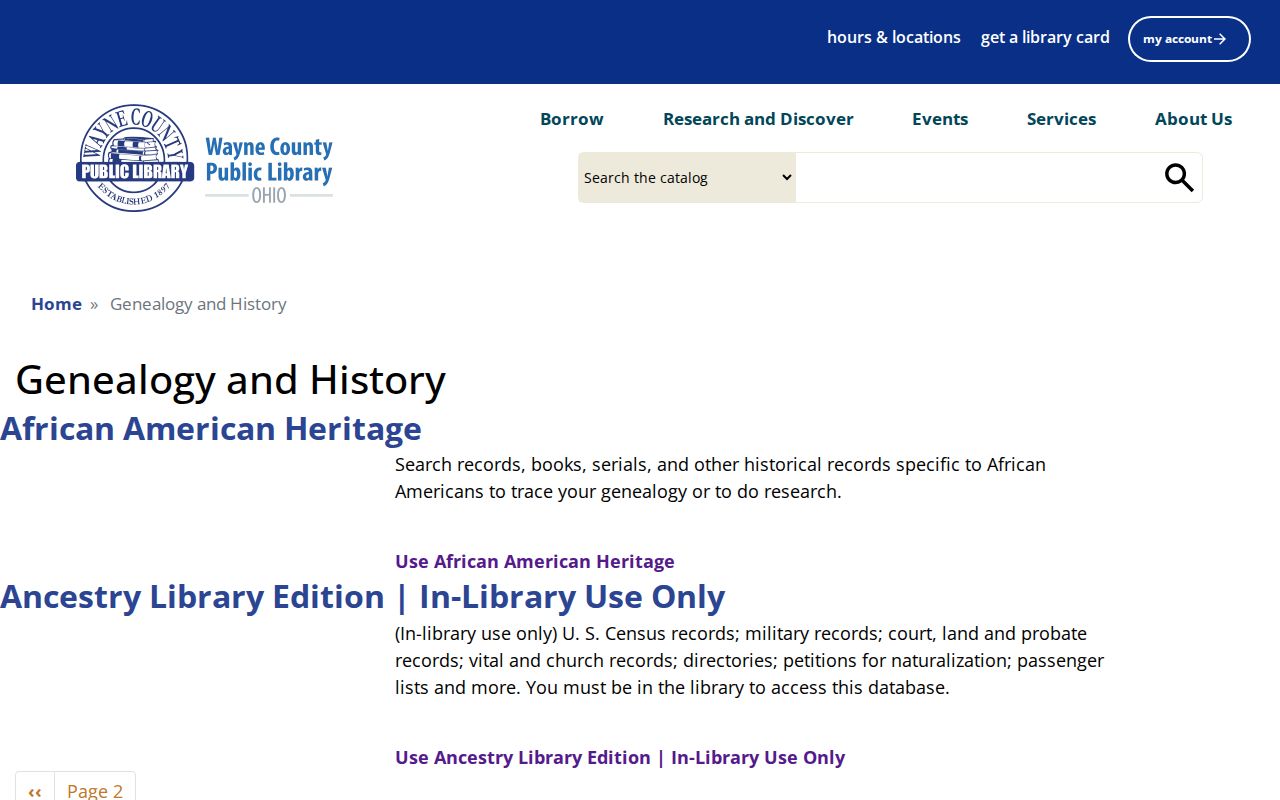
The library is particularly useful when a property has a long address history but no continuous online deed image. Its directories and phone books can supply a dated form of the street, while the obituary index can add a death date, newspaper page, family clue, or former address. Treat each result as a lead to confirm with the dated source.
A dedicated official house-history guide or paid research service was not located. WCPL is the documented research-support route, and the Wayne County Historical Association may have photographs, cemetery publications, and other local-history material without a public name or address index.
Note: A library listing can place a person at a date, but it does not establish a complete or current household.
Goldsboro Previous Residents and Deed Dates
The Register of Deeds says its records go back to 1913 and that most real-estate records are online from 1971 forward. Its certified-dates page provides a separate real-estate range of January 1, 1969 through December 31, 1994. Those statements answer different questions. They should not be combined into a promise that every instrument, image, or book is available online for every year. When the web index ends, use the ROD counter, older books, WCPL microfilm, and North Carolina Archives material.
The Wayne ROD certified-dates table shows the portal's series windows.
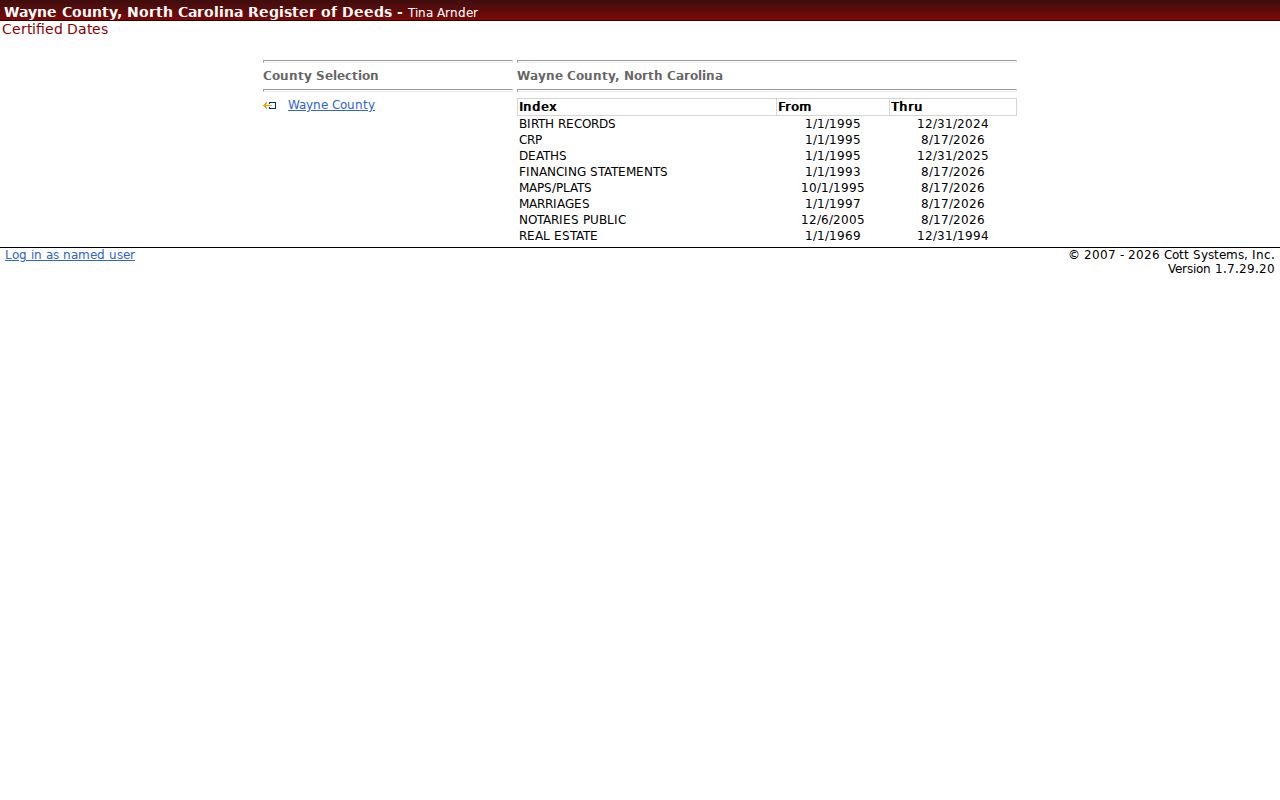
The date table is a useful warning against a one-cutoff assumption. At the counter, ask whether the needed deed, image, map, or book exists in the office record and how an earlier item is accessed. The ROD is at 224-226 E Walnut St, Suite 100, Goldsboro, and lists 919-731-1449 for its office.
Wayne's county-seat functions moved toward Goldsboro through 1845 and 1847 acts. Earlier local research may therefore be in county land, court, estate, tax, or marriage series rather than a city address file. The North Carolina Archives Wayne miscellaneous collection catalogues material dated 1788-1936.
Trace Goldsboro Previous Residents Through Deeds
Begin by freezing the present parcel identity in the Wayne Tax real-estate search: the parcel or PIN, legal description, deed reference, and current assessed owner. The property address is the situs, while the owner address fields are tax mailing addresses. A mailing address is a clue about the titled owner, not proof of who lived at the parcel. Then search the current owner as grantee, meaning buyer, in the ROD index. Read the seller, called the grantor, and the legal description before stepping backward.
Start the backward lookup through the Wayne deed-index guest search.
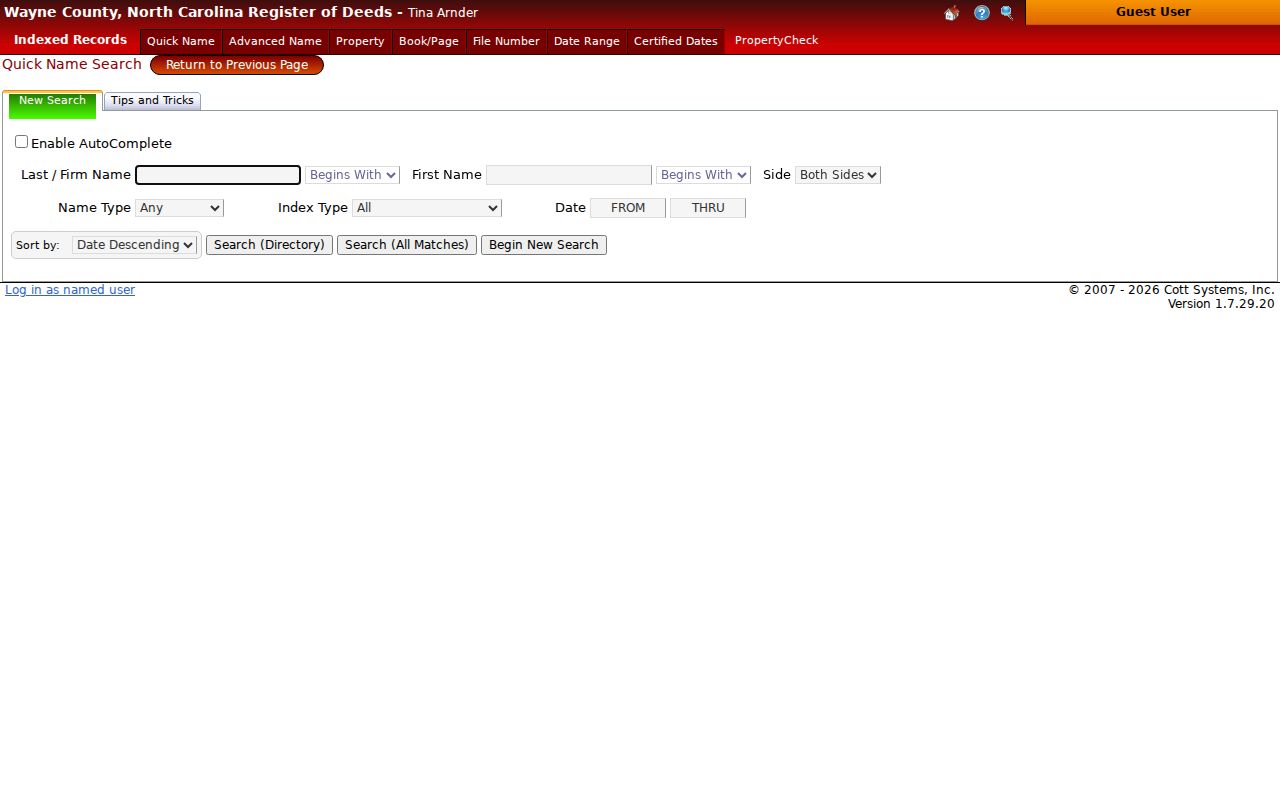
The index offers a name-led route into recorded documents. It cannot safely connect every old street number to a parcel by itself, because an instrument may rely on a subdivision lot, block, tract, or metes-and-bounds description. Match the physical description before treating an earlier deed as the same property.
- Save the Tax parcel card details, including PIN or REID, current owner, legal description, deed reference, acreage, and search date.
- Search the current owner as grantee in the ROD index and open the acquisition instrument when available.
- Record the grantor, instrument date, book and page or document number, and the legal description from that instrument.
- Search that grantor as an earlier grantee, then compare at least two physical clues such as lot or block, acreage, subdivision, adjacent tract, road, and date.
- Repeat only while the legal description supports the link. Move to the records counter, older books, microfilm, or Archives material when online coverage stops.
- Grantor
- The person or entity transferring the recorded interest, often the seller in a purchase deed.
- Grantee
- The person or entity receiving the recorded interest, often the buyer in a purchase deed.
- Chain of title
- The dated sequence of recorded transfers for the same property, tested through its legal description.
- Legal description
- The lot, block, subdivision, metes-and-bounds, or other written parcel identity used in a deed. It is stronger than a street number for an older match.
Goldsboro Past Residents in Directories
Deeds follow an ownership interest. Directories add the historical listing layer. DigitalNC has identified Goldsboro editions for 1911-12, 1923-24, 1925, 1930, 1934, 1938, 1940-41, 1954, and 1962, while WCPL's reported shelf continues unevenly through 1982. A later Hill Donnelly Cross Reference Directory reverses the search from address to listed name and phone. These sources can bridge the years between deeds, but a line may be omitted, use a spouse convention, give a rural route, or represent a business phone.
The DigitalNC 1934 Goldsboro directory record provides a remote example of the digitized series.
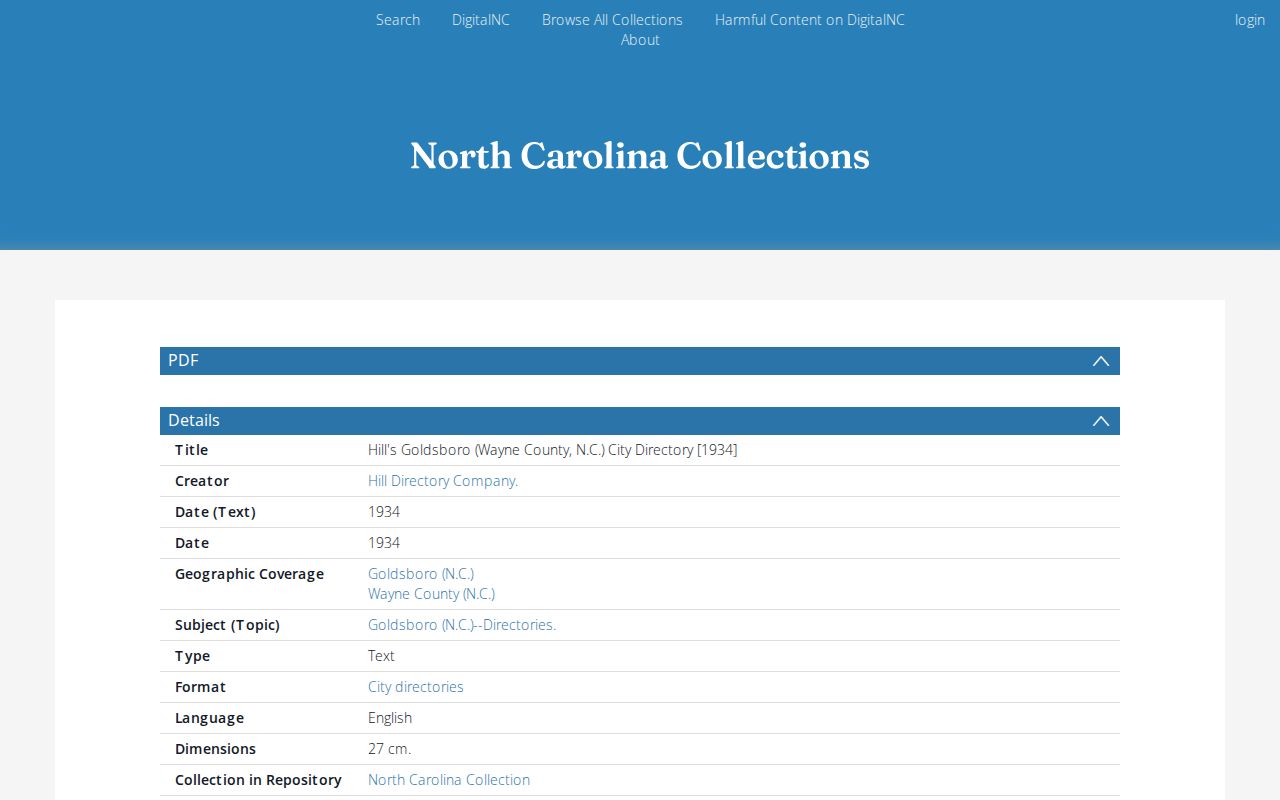
The scan is best read as a dated snapshot. Copy the edition, publisher, page, street spelling, telephone, business reference, and any spouse or widow notation before comparing it with the next available year. The collections, their publishers, and the way entries read are detailed on the Goldsboro City Directories page.
The Carolina Headlight and Goldsboro Messenger obituary index at WCPL can close a human trail with a death date and paper or page reference. Use the newspaper notice and a public probate or vital-record route to test the connection. A same-name obituary does not prove a particular address history.
Pair Goldsboro Previous Residents with Census
Use census schedules as a separate household check, not as a shortcut around the deed chain. Federal schedules become public under a 72-year release rule, and 1950 is the latest public schedule as of the research date. Compare the exact directory year to the nearest released census year, then assess street spelling, municipal boundary, rural route, and household relationships. Goldsboro's city boundary and postal label have changed in meaning over time, so a census place label is not automatically the same as a modern city-limit result.
- Start with the directory entry closest to the desired census year and retain its page citation.
- Search the released census using name variants, age range, relatives, and the address form where available.
- Compare household members and street information with the directory, then write down any conflict rather than smoothing it away.
- Test a property transition through the ROD legal description and use an obituary, probate filing, or newspaper notice only as dated supporting evidence.
A directory can point to a name or street while a census can show household relationships at its own date. Neither is proof of every move between dates. The strongest result is a sequence of dated records that agree on the property, time, and relationship.
Goldsboro Address Clues Beyond Deeds
The Library of Congress Goldsboro Sanborn map from 1885 adds a building-footprint and use layer before modern parcel cards. It is not a resident list. Pair its street and structure clues with an early directory, deed description, or census result. The research did not verify a complete list of later Goldsboro Sanborn years, so a later year should be found and cited separately rather than assumed.
Permits can date construction, alterations, demolition, or a change of use when the custodian exposes the historical file. Goldsboro uses an EnerGov permit route and city inspection instructions, but anonymous public search fields and a historical start date were not verified. Wayne Inspections handles county work outside Goldsboro, Mount Olive, and one-mile ETJs, so confirm the jurisdiction before requesting a permit record.
A permit applicant, contractor, owner, recorded grantee, or directory name represents a documented role at a date. It does not prove a full household or current location. Keep the source, date, and role beside each fact in a research log.
Goldsboro Address Continuity Gaps
No authoritative source verified a Goldsboro-wide renumbering year or a complete street-renaming table. Do not assume that an absent directory entry means the parcel was vacant, or that a modern number is an exact historical match. Bridge an apparent break by comparing old directory spellings, Sanborn maps, subdivision legal descriptions, deed plats, and the Goldsboro GIS address and municipal-boundary layers. City Planning, GIS, or the City Clerk can be asked for an existing historical street or renumbering record.
For a single address, preserve the old street wording as well as the present parcel identifiers. PIN, REID, DEEDREF, lot or block, acreage, and legal description are stronger crosswalks than a street number alone. The city also annexed Seymour Johnson Air Force Base on February 7, 1977, an example of why an old Goldsboro label needs to be checked against the date and map context.
Lawful use. Keep Goldsboro previous-resident research to family history, estate questions, and property history. North Carolina law prohibits stalking, so do not use an address trail to track, harass, or harm a living person.
Note: When a record trail breaks, label the gap and name the next custodian instead of inventing a connection.